Tuesday, April 30, 2013

The Can Pile


This picture of The Can Pile in Casselton, North Dakota is printed on the 1-cent Jefferson postal card of 1914-1951. The cars appear to be late 1940s and earlier. At that time the size of the pile was listed as 20 ft. diameter and 50 ft. high. The Can Pile was a tourist attraction created next to a Sinclair gas station in 1933 by Max Taubert. It looks like one could fill up on beer as well as gas there.


For a recent history of The Can Pile, see the post on the Eccentric Roadside blog, No can do: The late, great world's tallest used oil can stack of Casselton, North Dakota.

Sunday, April 21, 2013

Hillbilly Rest-Runt Comics


These three comic hillbilly postcards were compliments of the Hillbilly Rest-Runt, Hillbilly City, Ashevile, North Carolina.

 
Smorgasbord Sundays (SS) restaurant and food postcards

Thursday, April 11, 2013

The Black Forest Village - Century of Progress 1934


The postcard above has a panoramic drawing of the "Schwarzwald Dorf" which was a representation of  a German country village in the winter. The German Black Forest Village was one of the foreign villages at the 1934 Century of Progress Exposition in Chicago. (Merrie England was one of the other villages and was featured in last week's Sepia Saturday post). Buildings had synthetic snow banked on roofs and artificial icicles hanging from eaves. There were a toboggan slide, a frozen mill pond, and air-conditioned buildings.

Here is how the Black Forest Village was described in the Official 1934 World's Fair Guidebook:
Ice skating exhibitions are given continuously on the mill pond. Surrounding the mill pond are picturesque village houses and shops in which are carried on German home industries. You see cuckoo clocks made, canes carved and a village blacksmith hammering out small useful articles. Home manufacture of Kirsch is one of the village activities. German orchestra and strolling musicians give the musical entertainment. The villagers are in the quaint German mountaineer costumes.
The postcards below show some of the Black Forest Village scenes published by Western Photogravure Co. of Chicago. Put on your walking shoes and join the fairgoers for a walking tour of the village.

Exterior View


North Gate


Street Scene


Old Watch Tower


The Promenade


Ice Pond


Visit Sepia Saturday
For More Vintage Images


Thursday, April 4, 2013

Merrie England at A Century of Progress Exposition 1934


The English Village, known as "Merrie England," at the 1934 Century of Progress Exposition in Chicago was one of the "villages" that were added for the second year of the Fair. There were recreations of villages from foreign lands and past times, which also included Streets of Paris, Belgian Village, Italian Village, Spanish Village, Swiss Village, Colonial Village, Black Forest Village, Irtish Village, and Tunisian Village. The postcard above has a drawing of an aerial view of the English Village. The facade or outside wall of the village had recreations of castle architecture, while inside there were various types of historical buildings. The back of this postcard has the printed description shown below:


Other buildings inside Merrie England  that were mentioned in the Official Guide Book of the Fair included Harvard home, Robert Burns's cottage and John Knox home from Scotland, and The Olde Curiosity Shop from Charles Dickens' novel. Careful studies of original buildings were made in England and Scotland, and plaster casts of exteriors were used for exact reproductions of their appearance.

Western Photogravure Co. of Chicago published many black and white postcards with views of Merrie England. Some of them are show below. 

North Gate - Allington Castle


Hampton Court Palace Gate


Norman Gateway


Morris Dancers - Village Green


Shakespeare's Old Globe Theater


Leycester Court


Interior, Ye Olde Cheshire Cheese


For More Vintage Images


Sunday, March 31, 2013

Chicks Sing Easter Greetings


I didn't want to let Easter go by without posting an Easter postcard, but I have so many nice ones that I couldn't make up my mind which one to post. This one finally jumped out at me, both literally and figuratively. The background has an embossed cloth texture which makes the figures really stand out. There is a 3-D effect which is enhanced by the stem of the pussy willow that is placed over the border at the bottom right.

Happy Easter to You
Happy Easter to You
Happy Easter Dear Friends
Happy Easter to You.


Thursday, March 28, 2013

Giant Coffee Pots


One of my favorite postcard collecting topics is ""Big Things" or "Giant Roadside Attractions." Here are some postcards showing big and VERY BIG coffee pots. The first postcard above is circa 1959 and shows The Big Coffee Pot in Winston-Salem, North Carolina that was already more than 100 years old. It was originally erected as the sign of a tinsmith and is now a city landmark. It is 7 feet 3 inches tall with a volume of 740 gallons.

Several towns have water towers decorated to look like coffee pots. The one on the next postcard is in Stanton, Iowa and was erected in 1971. This 120-ft. "Swedish-style" pot is painted with decorative hearts and flowers. The pot is 35-ft. high and is on top of a 90 ft. tower. It holds 40,000 gallons. Stanton is also the home of similarly decorated coffee cup water tower holding 150,000 gallons that was erected in 2000.


The next postcard shows an information booth on Washington Island, Door County, Wisconsin.  This giant coffee pot was made of galvanized steel in 1941 and is painted with a Norwegian Rosemaling design. It has a door and two windows. It was originally used as a store and then as a tourist information booth, but now is just a local landmark.


The next two images are modern postcards (published about 20-30 years ago). The yellow (colorized and undated) building is now painted differently and known as Bob's Java Jive. There is a Lite Beer sign visible in one of the windows. This building is in Tacoma, Washington and was built in 1927 as the Coffee Pot Restaurant. (postcard photograph by Roger Lantaff, Island Photo-Graphics)


The last postcard is titled EAT and is a 1939 photograph by Frank Navara (postcard by Fotofolio). This building is no longer standing. It was the Coffee Pot Restaurant in Bremen, Indiana. The building was a wooden silo that was turned into the 18-foot-diameter restaurant in 1932. (information source quoted by several sites from Bremen and North Central Indiana by Acadia Publishing, 2001).


For More Vintage Images


Thursday, March 21, 2013

Williamsburg, Virginia (& Washington, D. C.) 1961


I especially like postcards that include someone with a camera in the picture. Here I have two 1960s postcards from Colonial Williamsburg, which is a restoration and re-creation of an 18th-century colonial American city. Williamsburg was the capital of Virginia during the colonial era.


These postcards are of the Public Gaol which is described on the back is as follows:
Pirates, captured in 1718, were imprisoned in Williamsburg's Public Gaol before being hanged. Today, the pillory and stocks outside the ancient gaol are favorite setting for camera enthusiasts.
I can attest to the popularity of this attraction. My family visited there during Spring Break in 1961, and I have photos that I took of my parents and sisters there. The pillory and stocks are still popular with both adults and children.


That same trip included a stop in Washington, D. C. The driving distance between Williamburg and Washington is about 150 miles.


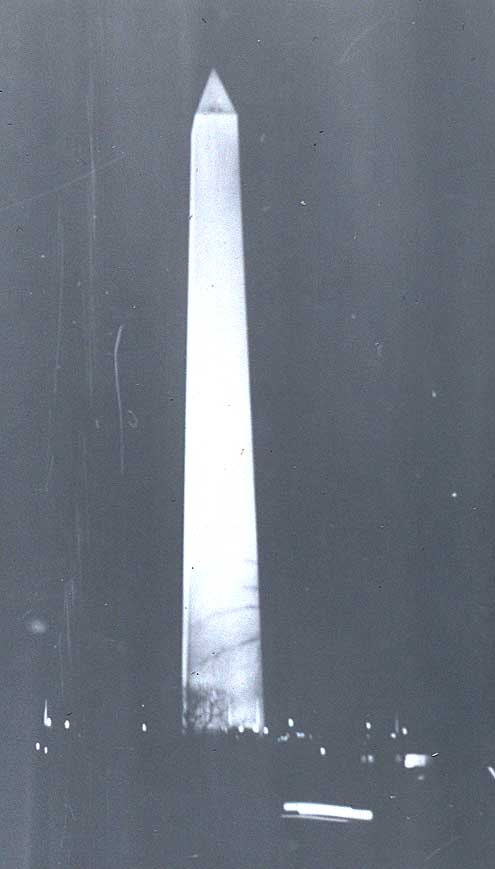
The cherry blossoms were blooming when we were in Washington. I have photos I took of the cherry blossoms (with a sister) and the Washington Monument, though unfortunately not together.


The Washington Monument is the most prominent structure in Washington, D.C.  The 555-foot, 5-1/8" marble obelisk honors the nation's founding father George Washington, who led the Continental Army to victory, and then became the nation's first president under the Constitution.

When I suggested the photo for this week's prompt, I had no idea whether it would be used or when. I chose it because I like the Library of Congress archive, and I was attracted to the set on Flickr of "Photographer in the Picture." It is just a coincidence that the image I suggested is appearing on Sepia Saturday during Spring Break and Cherry Blossom Festival time (March 20 - April 14, 2013). I actually had a harder time deciding on a post topic this week than I usually do.

For More Vintage Images


Related Posts Plugin for WordPress, Blogger...